
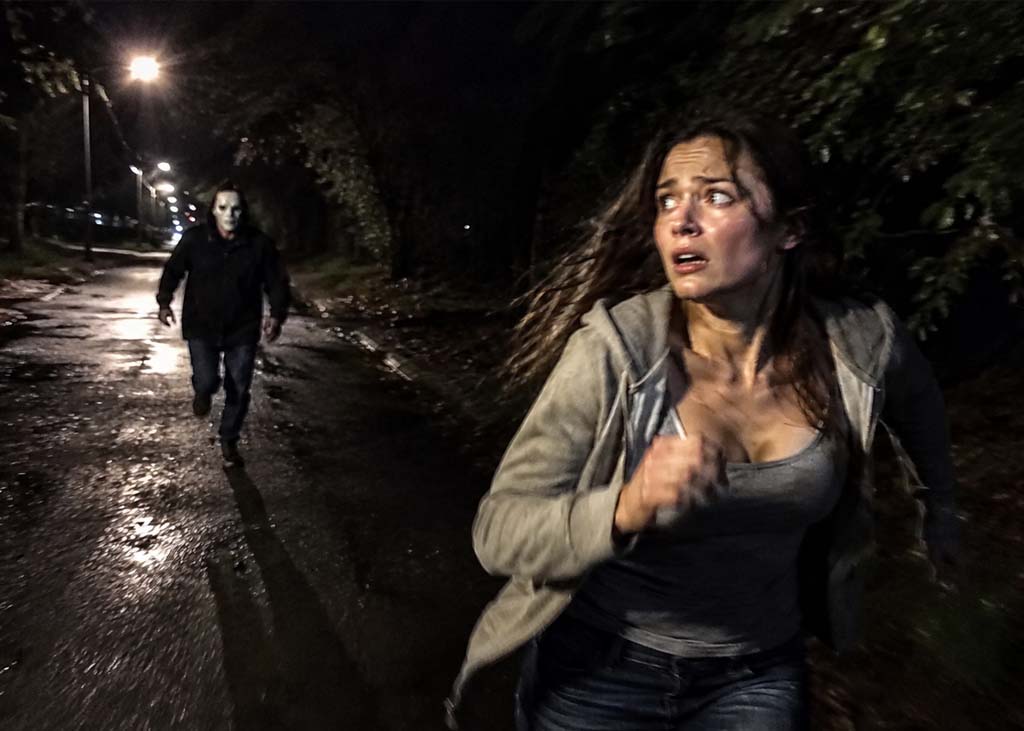
The final girl is one of horror’s most recognizable figures: bloodied, exhausted, underestimated, and somehow still standing.
We know the shape of the story. Friends disappear. Rules are broken. The danger gets closer. By the end, one young woman remains to face the killer, the monster, or whatever has been hunting everyone else. She survives, and the story treats that survival as victory.
What happens after the sirens? After the rescue? After the headlines, true crime podcasts, rumors, movie adaptations, and strangers who decide she was brave, lucky, hysterical, lying, ruined, or asking for it?
That question gives the final girl trope its modern power. Survival may end the immediate horror, but it does not end the story.
What Is the Final Girl Trope?
The term “final girl” is most often credited to film scholar Carol J. Clover, whose book “Men, Women, and Chain Saws: Gender in the Modern Horror Film” helped define the trope in relation to slasher films. The final girl is the survivor who remains until the end, confronts the killer, and often becomes the audience’s primary point of identification.
In its older form, the final girl trope often carried a moral charge. She survived because she was alert, restrained, observant, or somehow set apart from her peers. The genre rewarded her vigilance and punished everyone else’s carelessness, pleasure, or disbelief.
That framework has always been compelling, but it comes with some ugly baggage. It gives horror one of its great images of endurance, while also turning survival into a kind of character test. The final girl survives, so she must have deserved to. Others die, so they must have made mistakes.
Modern horror has spent a lot of time pushing against that logic. The more interesting final girl is not the “good” girl who survives because she followed the rules. She carries the story after everyone else disappears.
Survival Is Not the Same as Resolution
Horror endings often give us a clean visual language for survival: dawn, police lights, an ambulance blanket, one last look at the house, the woods, the lake, the road. The danger has passed, at least for now.
But the final girl trope becomes far more interesting when the ending stops being the ending.
Grady Hendrix’s “The Final Girl Support Group” takes that premise almost literally. The novel imagines a group of women who survived massacre-style horrors and now meet, years later, in a support group. The publisher describes it as a novel about “a group of heroines to die for,” but the real hook is the shift away from the attack and toward the aftermath.
That move changes the emotional center of the trope. The question is no longer, “Can she survive?” It becomes, “What did survival cost her?”
The cost can look like hyper vigilance, isolation, anger, public scrutiny, guilt, paranoia, or the exhausting knowledge that everyone wants her story to mean something cleaner than it does.
Survivors are often expected to become useful to other people. Inspirational. Understandable. Grateful. Strong in a way that makes everyone else comfortable.
The final girl, once she grows up, becomes a problem for that expectation.

When Women Become Stories
This is where the final girl trope connects beautifully with Maria Adelmann’s “How to Be Eaten,” even though Adelmann is working through fairy tales rather than slashers.
The novel reimagines familiar fairy tale women as modern survivors in a trauma support group. Its publisher describes it as a darkly funny and provocative book about classic fairy tale characters reimagined as modern women processing trauma.
That premise gets at something horror and fairy tales share: both genres are very good at turning women into symbols.
She appears as the girl in the woods, the bride in the forbidden room, the beauty in the beast’s house, the only survivor, and the woman who escaped. She becomes the woman no one believes, and the woman everyone thinks they understand because they have heard some version of her story before.
“How to Be Eaten” asks what happens when those women speak back—not as lessons, warnings, archetypes, or content, but as people who must live with the consequences of turning themselves into myths.
That is also where the final girl trope has gone next. The older version focused on endurance. The newer version asks who gets to interpret that endurance.
Survival makes the final girl visible, but visibility is not always freedom. Sometimes it becomes another kind of trap.
The Support Group as a Modern Horror Room
It makes sense that both “How to Be Eaten” and “The Final Girl Support Group” use support groups as framing devices. The support group is a wonderfully strange narrative space. Although it promises safety, it requires testimony. The group gathers people with related wounds but does not guarantee that they understand one another. Inside the room, honesty becomes both an invitation and a performance.
For horror, that is useful territory. A support group lets a story move beyond the event itself and into interpretation. It also allows for disagreement. No two survivors experience survival in the same way. Some want to explain, while others seek forgetfulness, revenge, or privacy. For some, the worst thing that happened to them has shaped their entire identity because the world gave them no chance to build anything else.
That is one reason the final girl trope continues to evolve. The culture has become more interested in aftermath, not because aftermath is more sensational, but because it is often more revealing. A monster can kill people in a few pages. Living after the monster takes longer.
The Final Girl as Critic
Stephen Graham Jones brings another angle to the final girl trope in “My Heart Is a Chainsaw.” His protagonist, Jade Daniels, knows slashers so deeply that horror becomes a framework for understanding her own life. Readers often describe the novel as both a slasher story and an examination of trauma, obsession, and belonging.
Jade is compelling because she is not simply inside the trope. She studies it. She wants the world to arrange itself according to slasher logic because that logic, however brutal, at least has rules. If there is a final girl, then chaos has a pattern. If chaos follows a pattern, maybe people can survive it.
That is a smart turn. The final girl trope no longer functions merely as a structure that confines a character. It becomes a language characters can use, misuse, cling to, or resist.
For well-read horror fans, this is where the trope becomes especially rich. It is not just a cliché to repeat or subvert. It is a way of talking about gender, violence, genre literacy, and the stories people use to survive what they cannot otherwise explain.
Why the Final Girl Still Matters
The final girl trope endures because it contains a contradiction horror keeps returning to.
It offers catharsis. Someone survives, sees the monster clearly, and fights back.
But when writers handle the trope well, it refuses to offer comfort. Survivors do not emerge pure, morally superior, or fully healed. Survival sometimes comes from luck, instinct, rage, timing, or the awful accident of becoming the one who remains.
The best modern uses of the final girl understand that she is not interesting because she is perfect. She is interesting because she remains.
That remaining creates narrative pressure. Which memories does she carry? What debt does she owe the dead? Her survival creates narrative pressure. What memories does she carry, and what debt does she owe the dead? Meanwhile, the world demands something from her, even as people consume her pain as entertainment. When she refuses to become the person others prefer, how will she respond to their reaction?
In that sense, the final girl has grown up because horror has become more willing to follow her past the moment of escape.
After the Story Ends
The final girl trope began as a way to describe a pattern in horror film, but its afterlife has become much bigger than that. It gives us a language for survival, and for the pressures placed on survivors once the danger has passed. That is why the trope still has teeth.
The final girl is not just the one who lived, but the one left with the story. And stories, as horror keeps reminding us, are not harmless things to inherit.
At Spooky Readers Book Club, this is exactly the kind of horror conversation we love: the monster, yes, but also the aftermath; the trope, yes, but also what happens when a writer turns it inside out. Join us for our next read, and bring your favorite complicated survivors with you.


