
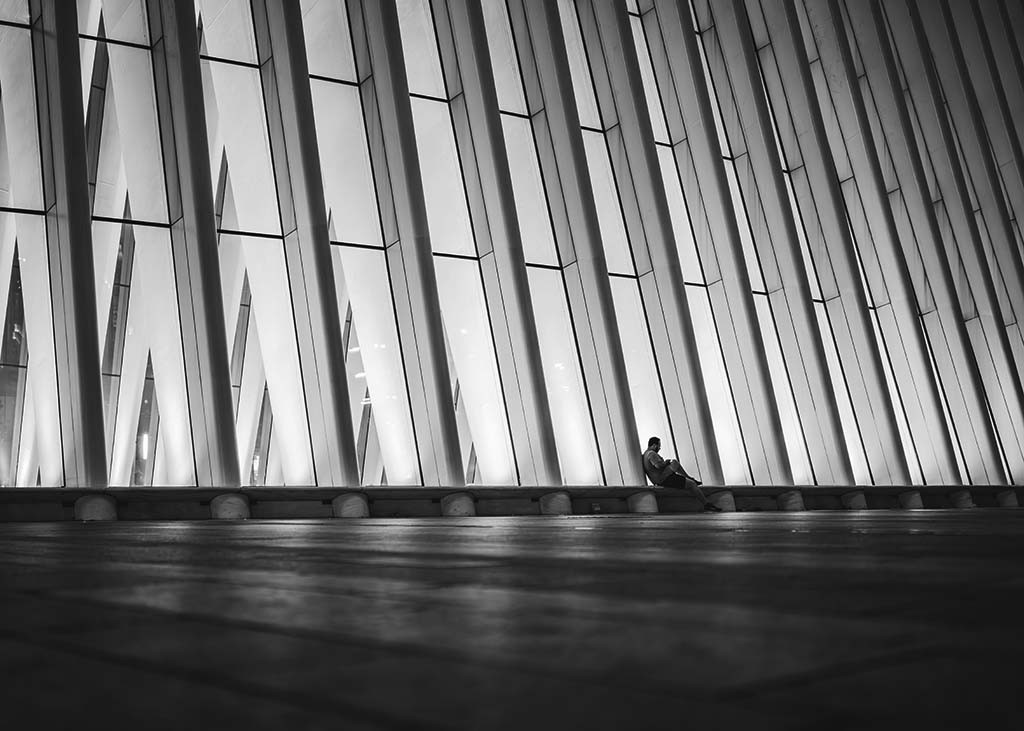
A few uninterrupted weeks in a beautiful mountain hotel might sound like an ideal vacation. For a struggling writer, it could even be the perfect opportunity to finish a manuscript. Throw in free accommodations and spectacular scenery, and you’ve got an appealing vacation package or, depending on who’s writing the brochure, the perfect premise for psychological horror.
Anyone familiar with Stephen King’s The Shining knows how badly this particular arrangement can go.
In psychological horror, isolation gives authors an opportunity to examine human behavior under extraordinary circumstances. Characters lose access to the people, routines, and familiar environments that ordinarily help them manage stress. Minor disagreements become increasingly difficult to resolve, and unusual experiences can occupy someone’s thoughts for hours.
How much of this has a basis in actual psychology? Research into loneliness, confinement, and human perception offers some fascinating explanations for why isolation has become such a reliable ingredient in horror literature.
Why Isolation Works in Psychological Horror
Psychological horror draws much of its tension from a character’s mental and emotional experiences. Fear can emerge from uncertainty, distorted perceptions, manipulation, or deteriorating relationships. Supernatural elements may be present, but how characters interpret and respond to their circumstances often determines the intensity of the experience.
Consider hearing a strange noise downstairs. Under ordinary circumstances, you might investigate or ask someone else whether they heard it. Now imagine hearing that same noise in an enormous hotel, knowing that the nearest occupied building is miles away and a snowstorm has made the roads impassable.
Isolation limits our opportunities to seek reassurance, investigate alternative explanations, or remove ourselves from uncomfortable situations. Horror writers exploit these limitations, allowing uncertainty to accumulate while characters struggle to understand their surroundings.
For readers, the experience becomes particularly unnerving when we have access only to the information available to an increasingly distressed character.
When Solitude Becomes Uncomfortable
For many book lovers, spending a weekend alone with a stack of novels sounds considerably more appealing than attending a large social gathering. Solitude can provide opportunities for concentration, creativity, and emotional recovery.
A 2018 study published in Personality and Social Psychology Bulletin found that voluntarily spending time alone could help individuals relax and regulate their emotions. Having a choice in the experience was an important factor.
The Centers for Disease Control and Prevention also distinguishes between social isolation, which involves limited interpersonal contact, and loneliness, the subjective experience of feeling disconnected from others. Someone can feel lonely in a crowded room or perfectly content spending several days alone.
Shirley Jackson explores this distinction in The Haunting of Hill House (1959). Eleanor Vance arrives at the supposedly haunted estate after spending years caring for her mother. Participating in a supernatural investigation offers her an opportunity to establish friendships and experience independence. Although several people occupy Hill House, Eleanor’s longstanding loneliness influences her relationship with the building and its inhabitants.
Jack Torrance similarly welcomes the isolation offered by the Overlook Hotel. Both characters enter unfamiliar environments hoping to improve their lives. Their emotional investment in staying makes recognizing and responding to danger considerably more complicated.

The Psychological Horror of Cabin Fever and the Loss of Routine
The expression “cabin fever” describes the restlessness and irritability associated with spending extended periods indoors. Although it is not a formal psychiatric diagnosis, researchers have investigated the experiences people associate with it.
In a 1984 study published in The Journal of Social Psychology, researchers interviewed Minnesota residents about cabin fever. Participants described boredom, frustration, and dissatisfaction with their surroundings. Changing their environment or finding new activities helped alleviate these feelings.
Horror writers can conveniently eliminate those options. A walk outside becomes dangerous during a blizzard. Visiting friends is impossible when roads are closed. Family disagreements become harder to put aside when everyone must continue occupying the same building.
Scientists have also studied prolonged confinement through simulated space missions. Between 2010 and 2011, six men spent 520 days inside a specially designed facility as part of the Mars500 experiment.
A 2014 study documenting the mission identified considerable differences in participants’ psychological responses. Some experienced difficulties involving sleep, mood, and alertness, while others demonstrated greater resilience.
Even under comparable conditions, people respond differently to confinement. Their personalities, expectations, personal histories, and coping mechanisms influence how they manage the experience. Effective horror fiction often develops its characters with this same understanding.
How Isolation Changes Our Perception
Imagine receiving a message from a friend that simply reads, “We need to talk.” Depending on your emotional state and relationship with that person, you might interpret it as relatively harmless or spend several hours anticipating terrible news.
Our expectations influence how we interpret ambiguous information.
In a 2010 review published in Annals of Behavioral Medicine, psychologists Louise Hawkley and John Cacioppo examined how perceived social isolation can increase sensitivity to social threats. Loneliness may encourage heightened vigilance, making individuals more attentive to potentially negative interpersonal experiences.
Psychological horror frequently develops suspense through similar processes. Characters question another person’s motives, interpret innocent remarks as hostile, or become increasingly preoccupied with particular suspicions. Readers who experience events through those characters’ perspectives may begin sharing their assumptions.
Under more extreme circumstances, limited sensory stimulation can also influence perception. A 2009 study on short-term sensory deprivation observed increased perceptual disturbances among participants temporarily deprived of sight and sound.
These experimental conditions differ substantially from ordinary solitude. Nevertheless, they offer insight into how perception can change when the information available from our surroundings becomes unusually restricted.
Writers can develop considerable suspense from these possibilities, particularly when neither the character nor the reader can confidently determine whether an experience has a supernatural explanation.
The Psychology of Confinement in Horror Literature
Charlotte Perkins Gilman’s The Yellow Wallpaper (1892) explores isolation through the experiences of a woman undergoing a prescribed treatment for her illness. Confined largely to a bedroom and discouraged from writing, the narrator becomes increasingly preoccupied with its elaborate wallpaper.
Gilman drew upon her own experiences with the nineteenth-century medical treatment known as the “rest cure.” The National Library of Medicine’s exhibition on Gilman and her work examines the treatment and the author’s objections to it.
Much of the story’s horror comes from the narrator’s inability to make decisions about her own life. Her husband, a physician, dismisses her concerns and insists that he understands her needs better than she does.
Stephen King examines a comparable loss of autonomy in Misery (1987). Following an automobile accident, novelist Paul Sheldon becomes dependent upon Annie Wilkes, who gradually establishes control over his movements, medical care, and creative work.
Both stories demonstrate how confinement increases a person’s vulnerability to manipulation. Escape may appear theoretically possible, yet the circumstances make exercising that freedom extraordinarily difficult.
For readers, recognizing the danger while remaining unable to intervene creates a particularly frustrating and effective form of suspense.

The Shining: A Family Under Pressure
Stephen King recounts the inspiration for The Shining on his official website. In 1974, he and his wife, Tabitha, stayed at the Stanley Hotel in Estes Park, Colorado, shortly before it closed for the winter. The nearly empty building captured his imagination, and a disturbing dream involving his young son helped inspire the novel.
The Overlook Hotel provides an extraordinary setting, but the family King places inside it gives the story much of its psychological credibility.
Jack Torrance arrives with an established history of alcoholism, anger, professional disappointment, and domestic conflict. He hopes his employment as the winter caretaker will provide a fresh start. The hotel’s supernatural influences gradually exploit vulnerabilities that existed before his arrival.
Wendy experiences the winter differently. Her desire to preserve the family becomes increasingly difficult to reconcile with concerns about its safety. As access to outside assistance diminishes, decisions that might ordinarily involve friends, relatives, or professionals become hers to navigate.
King also spends considerable time establishing the family’s daily routines and the practical responsibilities of maintaining the hotel. These mundane details give readers an understanding of the Torrances’ circumstances before supernatural events begin disrupting their lives.
Of course, prolonged isolation does not inevitably produce psychological deterioration, and mental illness should never be equated with violent behavior. Jack’s actions belong to a fictional narrative involving his personal history, choices, and supernatural manipulation.
What makes The Shining such effective psychological horror is the credibility of its domestic relationships, even when the family’s surroundings defy rational explanation.
Why We Enjoy Psychological Horror
Considering how unpleasant prolonged confinement can be, our enthusiasm for reading about it might seem curious.
One explanation is that frightening entertainment allows us to experience threatening circumstances while retaining control over our participation.
A 2020 study published in Psychological Science examined visitors to a haunted attraction and found that enjoyment was associated with particular levels of fear and physiological arousal. The findings suggest that recreational fear can be pleasurable when its intensity remains within a manageable range.
Literature offers an especially interesting version of this experience. Readers construct fictional environments in their imaginations, consider explanations for unusual occurrences, and interpret the behavior of characters facing extraordinary circumstances.
We can contemplate how we might respond to confinement or manipulation without experiencing the associated dangers firsthand. And unlike the occupants of the Overlook Hotel, we’re perfectly free to go outside whenever we’ve had enough.
A Good Reason to Come Together
There’s an amusing contradiction in reading a novel about isolation as part of a book club. Reading is frequently a solitary activity, yet discussing literature allows us to discover how differently other people experience the same story.
Psychological horror is especially rewarding in this respect because a character’s motivations, perceptions, and reliability can invite considerably different interpretations.
This month, we’re exploring these ideas through Stephen King’s The Shining at Spooky Readers Book Club. If you enjoy discovering the psychology behind frightening stories and exchanging literary interpretations with fellow readers, we invite you to join our book club.
Consider it a perfectly good excuse to get out of your own head for an evening.


