
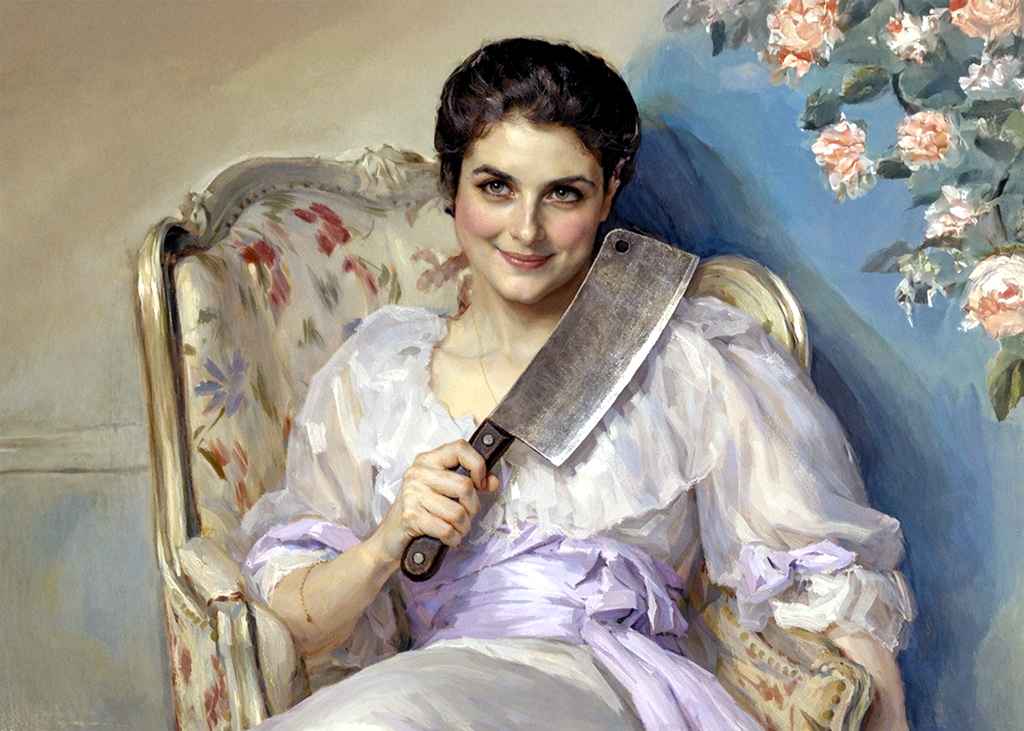
Victorian fiction returned again and again to a particular kind of anxiety: the woman who did not behave as she should. Beautiful, intelligent, domestic, and quietly dangerous, these characters unsettled readers not because they were visibly monstrous, but because they disrupted expectations of femininity, obedience, and moral clarity.
The obsession with dangerous women was not incidental. It reflected deep cultural fears about what might happen if women gained too much autonomy within a society that depended on rigid domestic order. Fiction became a testing ground where those fears could be explored, contained, and ultimately neutralized.
The Sensation Novel and the Birth of Domestic Threat
The mid-19th century saw the rise of the sensation novel, a wildly popular genre that blended crime, domestic realism, and psychological instability. These novels shocked Victorian readers by relocating danger from dark alleys and foreign spaces into respectable homes.
Instead of focusing on external villains, sensation novels suggested that the greatest threat could be a wife, governess, or lady of the house. The British Library’s overview of sensation fiction explains how these stories deliberately violated expectations of moral certainty and social order, provoking public controversy and moral panic.
Medical history reveals that diagnoses like hysteria were frequently applied to women who resisted prescribed roles or expressed anger, ambition, or sexual autonomy. Fiction mirrored this reality by using madness to remove dangerous women from society without directly addressing the systems that produced their behavior.
What made these stories so effective was their insistence that danger did not announce itself. It smiled, hosted dinner, and followed the rules just well enough.
Lady Audley’s Secret and the Dangerous Woman Made Visible
Mary Elizabeth Braddon’s Lady Audley’s Secret remains one of the clearest expressions of Victorian anxiety about dangerous women. Lady Audley is charming, socially fluent, and meticulously constructed. Her threat lies not in brute force, but in her refusal to remain legible within the moral categories available to her.

Rather than presenting madness as purely pathological, the novel frames it as a response to constraint. Financial insecurity, limited legal rights, and social precarity hover just beneath the surface. Victorian readers were encouraged to condemn Lady Audley, but they were also forced to confront how rational her actions could appear under pressure.
From Victorian Sensation to Modern Psychological Horror
While contemporary fiction may use different language, the structure remains familiar. Modern psychological horror inherits the Victorian fixation on domestic space as a site of moral collapse.
What has changed is perspective. Where Victorian novels often insisted on punishment or confinement, modern stories are more willing to let dangerous women speak in their own voices. The governess, the wife, and the caretaker are no longer required to justify themselves to the reader.
This shift explains why contemporary readers often find these characters compelling rather than cautionary. They are not simply threats to order. They are critiques of it.
The enduring appeal of dangerous women lies in what they reveal. They expose the fragility of social systems that rely on obedience and silence. They turn the home from a place of safety into a psychological pressure chamber.
Literary criticism on the domestic gothic frequently notes that the home functions as both prison and weapon. Essays on domestic gothic literature explore how female characters manipulate the very spaces meant to confine them.
Victorian Psycho and the Return of the Dangerous Woman
Virginia Feito’s Victorian Psycho reads like a modern answer to the anxieties Victorian fiction never resolved. Winifred Notty is not dangerous because she fails at femininity, but because she performs it too well. As a governess, she occupies the most quietly powerful position in the Victorian household: intimate, observant, and structurally invisible. Her violence does not erupt from chaos. It grows patiently inside a system designed to contain her.
Unlike sensation novels that ultimately pathologized or confined their dangerous women, Victorian Psycho refuses the comfort of explanation. Winifred is not redeemed by trauma nor neutralized by diagnosis. The novel exposes how Victorian frameworks of madness, morality, and domestic duty were never tools for understanding women, but for managing them. In doing so, Feito restores agency to a figure Victorian fiction worked hard to silence.
What makes the novel unsettling is not its brutality, but its clarity. Winifred understands the rules, understands the expectations placed upon her, and understands exactly how fragile they are. Her violence feels less like transgression than consequence. Victorian Psycho does not reinterpret Victorian fears. It confirms them, and in doing so, reveals how little those fears have changed.
If these questions linger with you, about power, domestic space, and the women literature taught us to fear, you might enjoy exploring them in conversation rather than isolation. At Spooky Readers Book Club, we read books like Victorian Psycho alongside classic and contemporary works that unsettle the home, the mind, and the roles we’re told to inhabit. There’s no required expertise, no academic gatekeeping, just thoughtful discussion, curiosity, and a shared interest in stories that refuse to behave. If you’ve ever closed a book and wanted to talk about why it disturbed you, you’d be very much at home.
A Fear That Never Left the House
Victorian fiction was obsessed with dangerous women because they revealed too much. They showed how easily order could fracture, how thin the line was between propriety and violence, and how unstable the domestic ideal truly was.
From sensation novels to modern psychological horror, the home remains the most effective setting for fear, and women who refuse their assigned roles remain its most unsettling inhabitants.
Once you recognize this pattern, Victorian fiction stops feeling distant. It starts to feel uncomfortably familiar.


