
The Origins of Dark Academia: From Gothic Shadows to Campus Secrets
While the term “dark academia” is modern, its spirit runs deep through literary history. Classical tragedies gave us the archetype of the brilliant yet doomed intellectual—Hamlet, paralyzed by philosophy, and Doctor Faustus, who traded his soul for forbidden knowledge. These figures set a template for characters whose pursuit of truth comes at a terrible cost.
The Gothic literature of the 18th and 19th centuries was layered in atmospheric settings and psychological horror. Mary Shelley’s Frankenstein explored the dangers of unrestrained intellectual ambition, while Edgar Allan Poe filled his stories with crumbling architecture, obsessive minds, and the creeping shadow of madness. M.R. James’s ghost stories often placed scholars in peril, with dusty manuscripts and locked libraries acting as gateways to supernatural forces.
By the 20th century, the campus novel emerged as a distinct literary form, exploring academic life with romance, satire, and social commentary. Evelyn Waugh’s Brideshead Revisited romanticized the closed world of Oxford, while Kingsley Amis’s Lucky Jim skewered its pretensions. These novels showed how the university setting could serve as a microcosm for human ambition and folly. But it was Donna Tartt’s The Secret History in 1992 that crystallized the modern definition of dark academia—blending classical studies, intellectual elitism, murder, and psychological unraveling into a compelling narrative blueprint still influencing the genre today.
The Evolution of Dark Academia Books
Following The Secret History, the late 1990s and early 2000s leaned toward postmodern and psychological takes on the genre. Authors experimented with the campus setting to explore themes of alienation, obsession, and morality.
By the 2010s, dark academia saw a major revival, blending with horror, fantasy, and surrealism. Mona Awad’s Bunny turned MFA programs into surreal fever dreams of transformation and violence. Emily M. Danforth’s Plain Bad Heroines wove together a cursed New England boarding school and a present-day film set haunted by its past. Leigh Bardugo’s Ninth House brought the genre into occult territory, exploring the dark magic and privilege of Yale’s secret societies. International voices like Marina and Sergey Dyachenko’s Vita Nostra took the core ideas of academic transformation and turned them into something surreal, philosophical, and unsettling, proving that the genre could thrive far beyond its Ivy League origins.
What connects these works is the way they use the university setting not just as a backdrop, but as a crucible—an enclosed world where ambition, intellectual hunger, and moral compromise inevitably collide.

Why Academia Makes the Perfect Backdrop for Darkness
Part of dark academia’s allure is that academia itself is full of contradictions. Universities promise enlightenment and the life of the mind, yet often hide insularity, elitism, and systemic inequality. The campus becomes both a sanctuary for knowledge and a stage for betrayal, obsession, and transgression.
These tensions have deep real-world parallels. Historical academic scandals, student uprisings, and the romanticized image of 19th-century scholarly life have shaped how we imagine these spaces in fiction. At its best, dark academia critiques the privilege and exclusivity of elite education, showing how the same walls that protect ideas can also trap their keepers.
The genre has also faced valid criticism. Early works often centered on white, upper-class characters and romanticized toxic relationships, unhealthy mental states, and the idea that suffering is a necessary part of brilliance. More recently, authors have been subverting these tropes, widening the scope of settings, characters, and perspectives. These shifts have opened the genre to new interpretations while keeping its core tensions intact.
The Social Media Revival and Future of Dark Academia
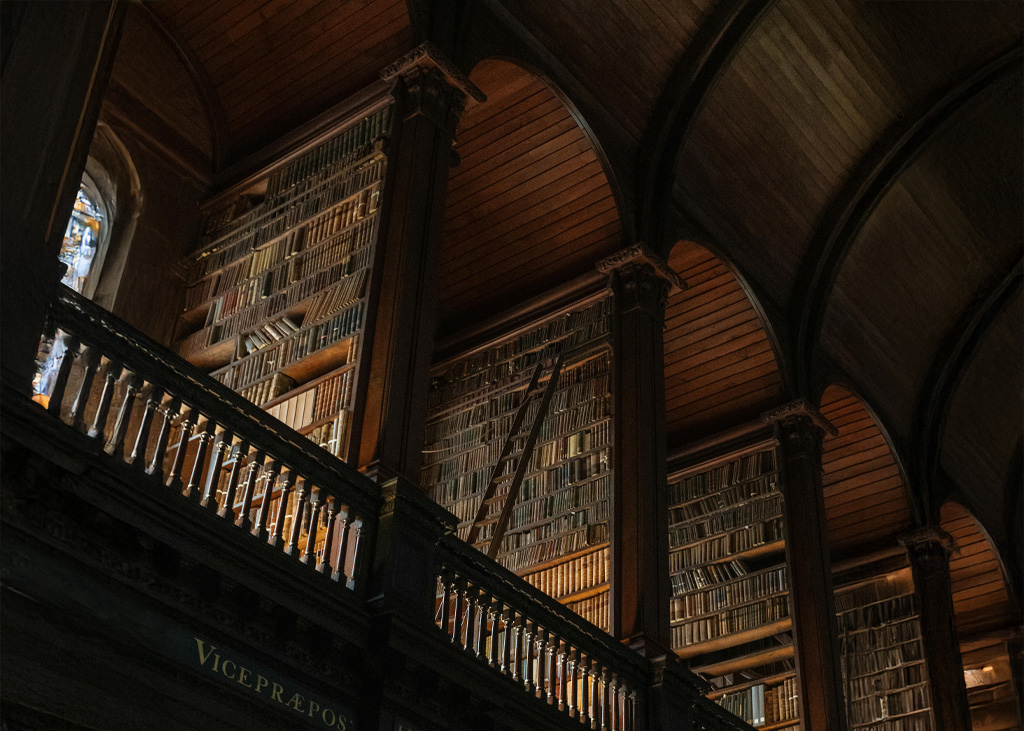
In the late 2010s, dark academia exploded on Tumblr, Instagram, and TikTok, transforming from a literary niche into a full-fledged aesthetic. Think tweed blazers, turtlenecks, leather satchels, and moody library corners photographed in golden light. The visual side of dark academia often glosses over the genre’s heavier themes, focusing on its romantic surface, but it has undeniably introduced new readers to both classic and contemporary works.
This revival has fueled a new wave of dark academia novels and inspired genre-bending experiments. As the aesthetic grows more global, we’re seeing settings shift beyond the Ivy League to universities in other countries, as well as stories that mix dark academia with horror, science fiction, and magical realism.
Looking ahead, the genre seems poised to continue evolving. Expect more horror crossovers, more non-Western academic settings, and greater attention to inclusivity. Whether the setting is a crumbling New England college, a haunted boarding school, or a hidden library in another country, the heart of dark academia remains the same: the allure of knowledge, the cost of ambition, and the shadows that gather where intellect meets obsession.
Because in the end, dark academia isn’t just about candlelit seminars and beautiful prose. It’s about the price of curiosity. And in these stories, not everyone who enters those ivy-covered halls makes it out alive.


